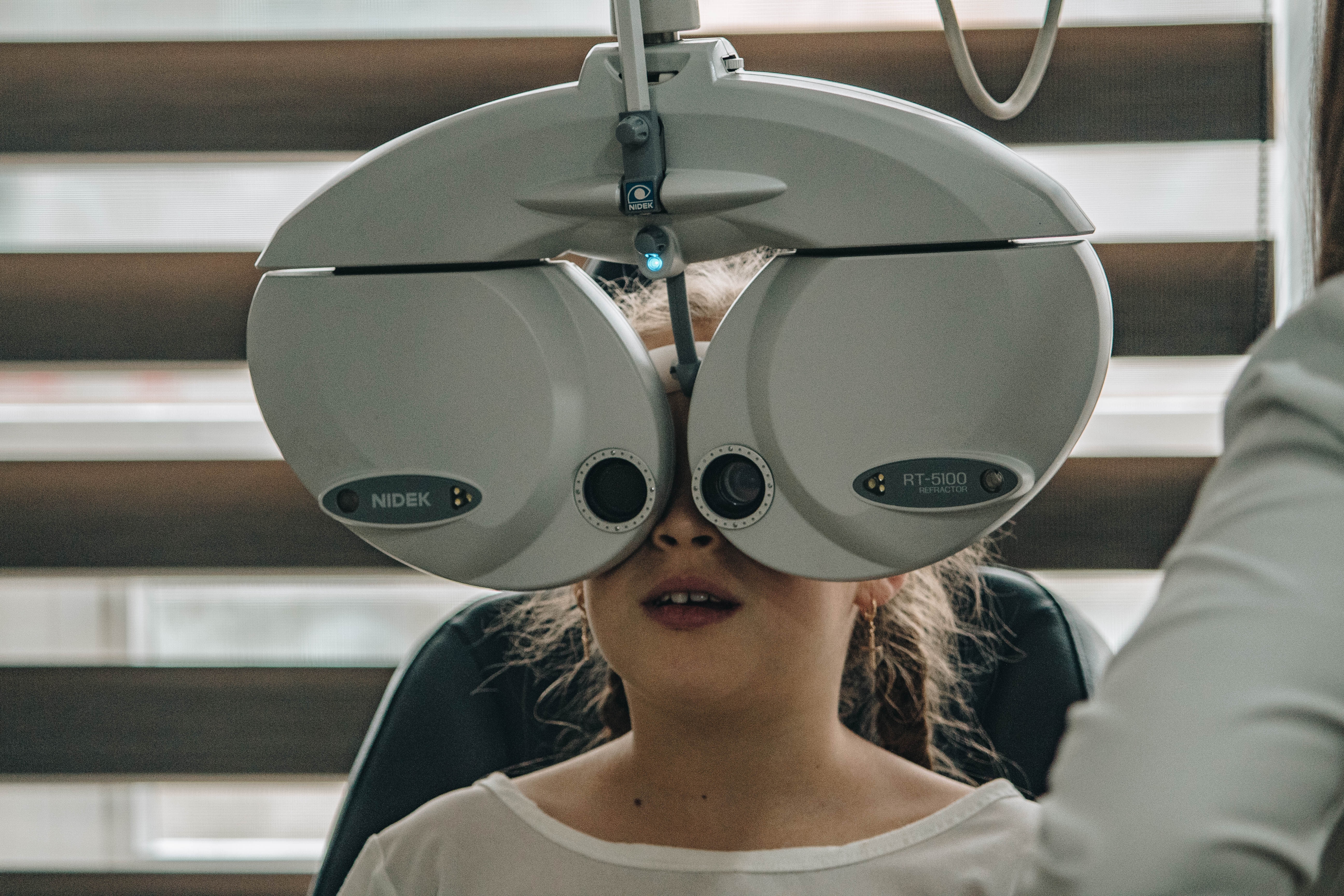
Annual eye tests are funded by the NHS for all children up to the age of 16 and up to 18 in full-time education.
Children’s Services
Routine Examinations
The NHS will pay for annual check-ups for all children up to the age of 16, as well as 16, 17, and 18 year-olds still in full-time education. Regular checks as they are growing mean that ocular problems are caught earlier, potentially preventing sight loss in the future. Eye tests are also invaluable for picking up on a wide range of other health issues seemingly unrelated to how well we are seeing.
Hospital Prescriptions
In some cases, young children will be under the care of the local hospital ophthalmology department, and will be provided with a hospital prescription which can be brought to an Optician to have made into spectacles.
Children’s Visual Screening
When children are 4 to 5 years old they participate in visual screening, normally held through their school. This is to identify any issues with their vision, so that these can be addressed as early as possible. If any issues are found, they will be referred to either the hospital eye service or your local Optician who offers the screening service.
Spectacles
We have all sorts of styles and sizes of children’s frames to choose from, the cost of which we subsidise. When children are provided with a new prescription, the NHS will provide a voucher which contributes to the cost of the spectacles. We use this voucher to cover the cost of the standard lenses, so in most cases only the charge for the frame is passed to the patient’s parent or guardian.
Click here to find out how we make your spectacles!
Repairs
We all know that kids can be heavy-handed with their spectacles! When frames or lenses are broken, we can request a repair voucher which will help to cover the cost of the replacement parts. This may be for one or both sides, the front, or the whole frame. If the lenses are scratched or damaged, the repair voucher can be used against these too.
Costs

Kid’s Frames
With kids soon growing out of their glasses, we subsidise the cost of children’s frames so that they can stay affordable. We have frames from £7.50, in plastic and metal, and in as many colours as we can! We stock a range of sizes including spectacles made for tiny tots that hook around the ears, and for young adults in line with current trends.

Single Vision and Bifocal Lenses
Here at the Cotswold Eye Care Centre, we say the voucher covers the cost of standard lenses, and any upgrades, including coatings and higher index materials, are charged at the difference, so in most cases you just have the cost of the frame to consider.
Myopia Management Lenses
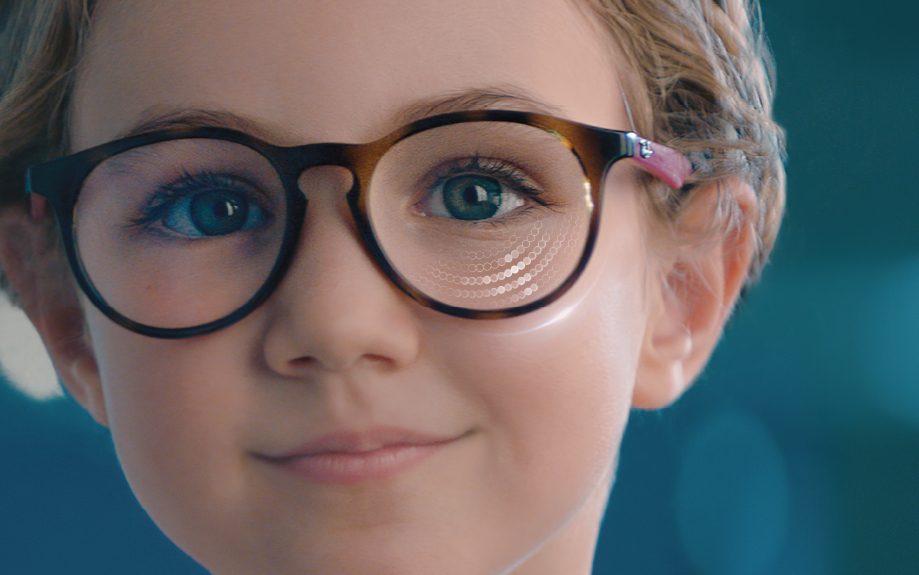
Relatively new in the optical industry are myopia management lenses, which aim to reduce myopia (short-sightedness) in children up to the age of 16. The earlier that children begin wearing this type of lens, the more impact they can have on reducing their myopic advancement. If your child is myopic, ask in store if this lens is right for them.
Frequently Asked Questions
How old do children need to be to have an eye test?
Children’s eyes can be tested at any age, without needing to read or speak. Initial screenings are normally carried out during hospital examinations soon after they are born at around 6-8 weeks, but after this if you have any concerns about your child’s vision, or if there is a history of visual problems in your family, it’s best to get them checked as regularly as possible.
What signs might indicate my child is struggling with their vision?
- Complaining of headaches or eye pain
- Needing to hold things very close to see them
- Squinting, covering one eye, or turning their head to focus on something
- Problems with co-ordination or being particularly clumsy
Can poor eyesight be inherited?
Yes, vision is to some degree genetic, so you are more likely to have visual problems if one or both of your parents do too. Vision is also affected by environmental and lifestyle factors though, so with careful management the risks of developing poor sight may be reduced, such as limiting screen time and employing the 20-20-20 rule (every 20 minutes spent doing close-work, look at something 20 meters away for 20 seconds).
 Cotswold Eye Care Centre Ltd