With a huge variety of lens designs on the market, our expert advice can help you make the correct choice for your needs within your budget.
In recent years there have been major developments in spectacle lens technology, all designed to improve your vision and to make your spectacles more comfortable to wear and look more attractive. We feel it is important to discuss and advise on the most suitable lens required for your lifestyle and individual visual requirements, and will always take the time to go through this with you. Our experts are passionate about the mechanics of optics and we think this shows!
There are three main types of lenses available…
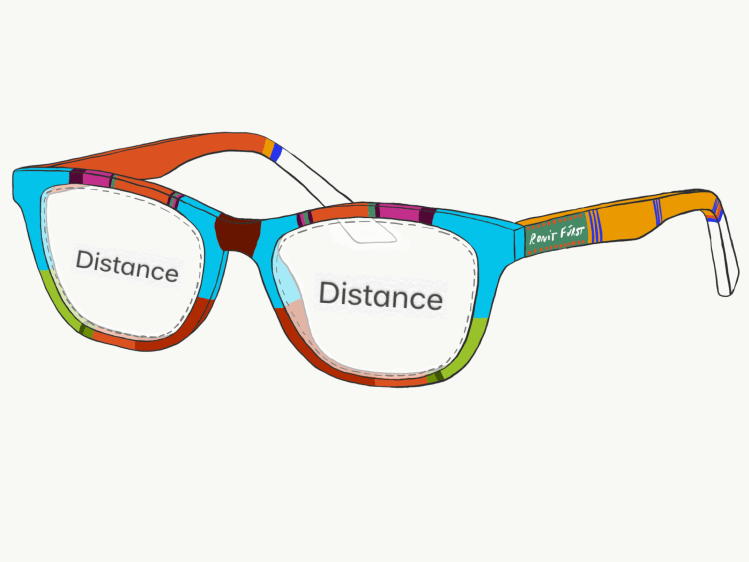
Single Vision Lenses
Single Vision Lenses have only one prescription incorporated into the lens. They are usually used for distance, intermediate (computer length / VDU) or reading.
Bifocal Lenses
Bifocal Lenses have two prescriptions incorporated into the lens. This is done by using a segment of different shapes and sizes, the most common being a sideways D shape causing a visible line across the lens. Usually the distance is in the top and reading in the segment.
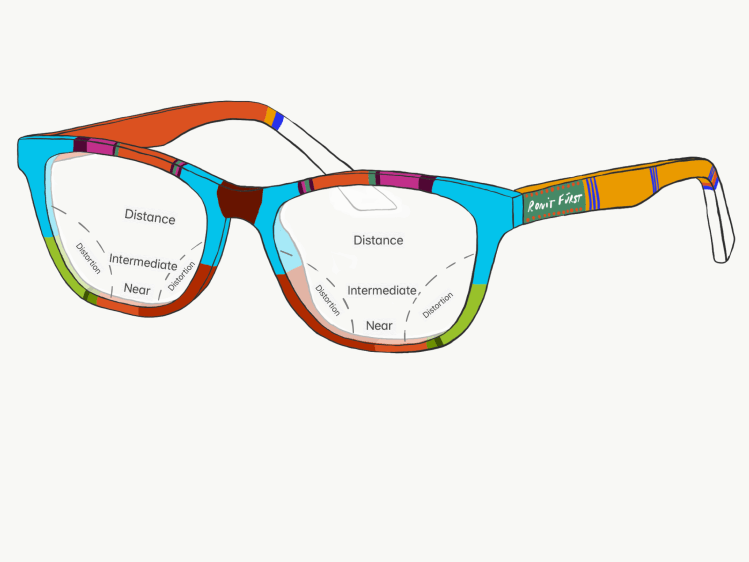
Progressive Powered Lenses (PPL) also known as Varifocal Lenses
Varifocal lenses are the most complex lens type, gradually blending multiple prescriptions in one lens. They are the modern alternative to bifocal lenses (without the line). They are generally advised to people over the age of 40, normally when separate distance and near prescriptions are required giving you clear vision at all distances as an all-in-one pair when looking through the correct part of the lens. There are many options of lens designs to choose from which we will be able to advise you on and the latest developments.
Advantages and Disadvantages
Single Vision
Advantages
- Easiest to adapt to
- No distortion
- Normally the cheapest type of lens
Disadvantages
- Inconvenient as you might need to have multiple pairs for different reasons / tasks and will have to swap and store multiple pairs
- Can be more expensive when you have multiple pairs
Bifocal Lenses

Advantages
- Cost effective way of having one frame containing both distance and reading prescriptions.
- Easier to adapt to compared to varifocals
- No distortions and a large reading area
Disadvantages
- Cosmetically some people are very conscious of the line
- The floor is blurred when walking around as you are looking through the reading segment.
- Dependent on the prescription used in the segment there is a reduced focal range so usually no middle vision
Varifocals (PPL)
Advantages
- Multiple focusing lengths within one lens.
- Cosmetically looks the same as single vision lenses without a line
- The closest to getting your old vision back.
Disadvantages
- Often harder to adapt to as the design of the lens means there will always be distortion towards the edges (though going for a better lens reduces this
- Everything seen through the bottom/reading part of the lens will be blurred
- Generally more expensive, dependent on the quality of the lens.
Other lens options…
High Index
In the past, some patients who have had a more complex prescription have had to put up with thicker and heavier lenses in their spectacles. Thankfully today’s advances means the super thin and light weight high-index lenses now make them look great and feel more comfortable.
Myopia Management
Advancements in technology in recent years have seen the development of the myopia management lens, which is designed to slow or even stop the progression of myopia (short-sightedness) in children.
Occupational
We can supply prescription safety spectacle packages for industry and hobby workers. All come with safety certification. We can also supply prescription swimming googles and diving masks, as well as cycling/sports spectacles and snooker spectacles among other things.
Be sure to ask us what best suits your needs.
Double Aspheric
Double aspheric lenses use an irregular curvature on both the front and back surfaces of the lens to create two focusing points. Aesthetically this makes the lens more consistently flatter and thinner, and reduces the magnification or minification of the eyes (seeming larger or smaller in appearance) through the lens.
Vistamesh
Vistamesh lenses have an extremely fine and barely visible mesh set within them which helps to channel light from directly ahead, and filtering out some of the surrounding glare. This can be extremely distracting and even upsetting for people with light sensitivity and sometimes people with learning difficulties.
FL-41
FL-41 lenses are type of tinted lens that filter out certain blue and green light frequencies known to cause migraines and visual discomfort. The resulting colour of the lenses is a shade of reddish pink.
Photochromic or Transitions
Transitions are a brand of photochromic lenses which go darker when exposed to UV light. Transitions have recently launched a new type of lens called the Xtractive, which reacts to both UV and visible light. This means they are more sensitive behind windows, notably car windscreens.

MAR Coatings
MAR, or Multi Anti-Reflection, coatings increase the amount of light able to travel through the lens by reduced the dispersal of light within the material. It also reduces glare and provides greater contrast, generally improving your vision.
 Cotswold Eye Care Centre Ltd