
We are pleased to offer private comprehensive hearing services by the Hearing Care Partnership.
Hearing Services
Complimentary Hearing Assessments
A full 90-minute assessment is carried out to determine if you are experiencing any hearing loss, and if so what type. Our trained professionals are here to help – there’s no obligation to purchase hearing aids or use our ear wax removal service.
Tinnitus Management
Tinnitus, a persistent ringing, buzzing, whistling or hissing in your ears from no external source, can be a debilitating condition affecting 10% of the population. But the good news is there are plenty of ways to manage it.
At The Hearing Care Partnership this all begins with our free tinnitus consultations, which will set you up with a tailored tinnitus management plan. So you can get back to living life at full volume.
Ear Wax Removal
At The Hearing Care Partnership we offer a comprehensive ear wax removal service, delivered by our trained professionals at any of our locations across the UK.
Digital Hearing Aids
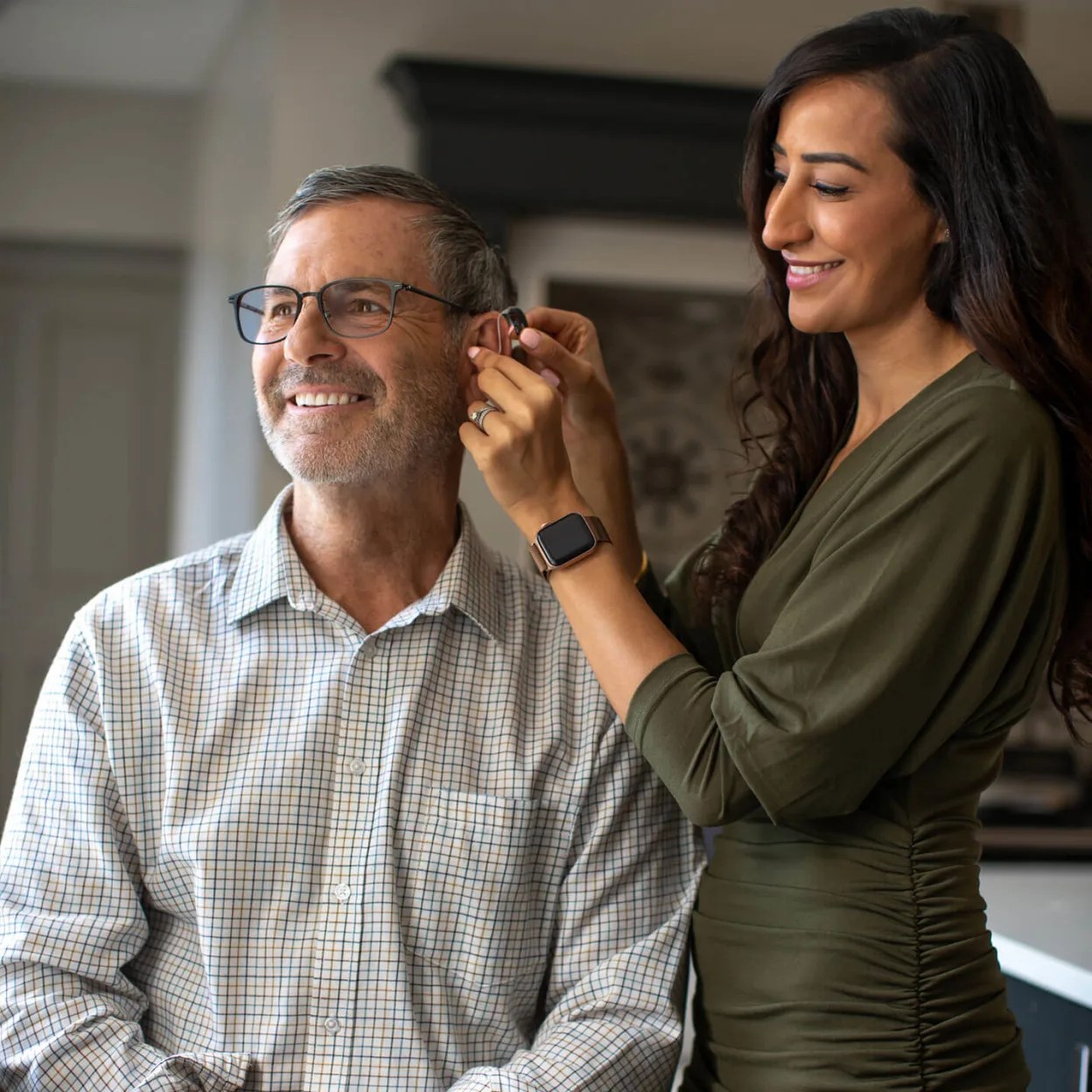
From custom-fit, invisible hearing aids to rechargeable and Bluetooth tech, The Hearing Care Partnership offers an array of cutting-edge hearing aid technology, catered to your individual needs by our expert audiologists. With our personalised service package, you can also expect year-round aftercare to make sure your hearing is well taken care of.
Hearing Protection
The Hearing Care Partnership provides expert hearing protection services ranging from basic ear plugs to custom-moulded specialist products for music, shooting, motor sports, water sports and much more.
What are the signs of hearing loss?
It can be difficult to recognise the signs of hearing problems because age-related hearing loss is usually a gradual process. It isn’t painful or physically uncomfortable in any way, it’s simply caused by natural wear and tear on the hair cells of the inner ear. These cells transmit signals to the brain, which then interprets those signals as sound. So as these hair cells deteriorate, so does your hearing. More than 11 million people in the UK are living with hearing loss, so it’s important to be able to understand the signs of hearing impairment.
There are several key indicators to be aware of:
Adjustments in volume
The volume of the television or radio is usually turned right up, perhaps even to the point that other people complain about it being too loud.
A hearing-impaired individual often asks people to repeat themselves, or those around them may find themselves having to repeat something several times before it’s acknowledged.
Friends, family and perhaps even co-workers will talk more loudly around an individual with hearing loss. They may not even realise they are doing so, but will have adapted the volume of their speech over time to cope with the gradual change in hearing.
Difficulties distinguishing sounds
To someone living with hearing loss, it can seem like everyone mumbles these days. In reality, they are losing the ability to distinguish certain sounds in speech, which makes it sound as though those around them are not enunciating clearly.
Due to difficulties in understanding speech, someone with hearing problems usually prefers to face the person they are talking to. Watching the speaker’s lips and facial expressions helps them understand what is being said.
Relying on watching a speaker’s face can make telephone conversations extremely difficult. They can be extremely frustrating for both parties, which may mean they are eventually avoided altogether.

Social Isolation
Individuals with hearing loss may choose to avoid noisy environments, including social gatherings. High levels of background noise can make it even more difficult to pick out what a single person is saying, so even a conversation around a busy dinner table can feel very isolating.
Although hearing loss affects an individual physically, the subsequent impact on communication and socialising means it has significant psychological consequences as well. It can be an incredibly isolating and frustrating condition to live with, as well as increasing the likelihood of developing depression and even dementia.
 Cotswold Eye Care Centre Ltd